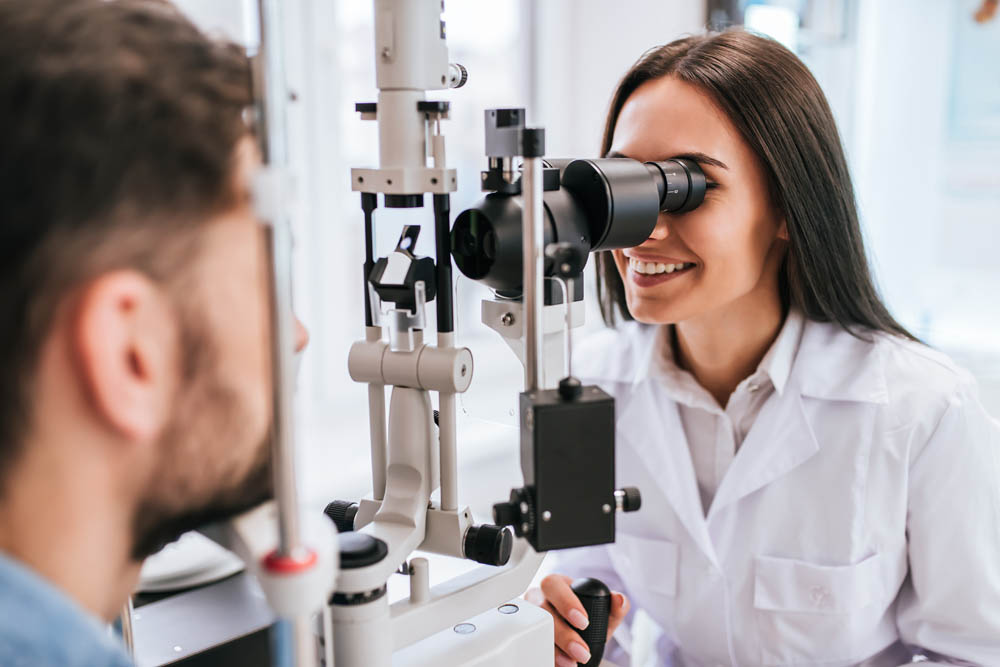
Optometrists
Previously known as ophthalmic opticians, optometrists are trained professionals who examine eyes, test sight, give advice on visual problems and prescribe and dispense spectacles or contact lenses. They also recommend other treatments or visual aids where appropriate. Optometrists are trained to recognise eye diseases, referring such cases as necessary and can also use or supply various eye drugs.
Optometrists study at university for at least three years and participate in a full year of training and supervision before qualifying.
All optometrists practising in the UK must be registered with the General Optical Council, the profession’s regulatory body, and are listed in the Opticians Register. When choosing an optometrist, look out for the letters FCOptom or MCOptom after his or her name. It means that optometrist is a fellow or member of the College and adheres to high standards of clinical practice.
Dispensing Opticians
Dispensing opticians advise on, fit and supply frames and lenses after taking account of each patient’s lifestyle and vocational needs. Dispensing opticians are also able to fit contact lenses after undergoing further specialist training. They are registered with and regulated by the General Optical Council and their representative body is the Association of British Dispensing Opticians.
Ophthalmic Medical Practitioners (OMPs)
Ophthalmic Medical Practitioners are medical doctors specialising in eye care. Like optometrists, they examine eyes, test sight, diagnose abnormalities and prescribe suitable corrective lenses. OMPs are registered with and regulated by the General Medical Council and their representative body is the British Medical Association (Ophthalmic Group).
Ophthalmologists
Ophthalmologists specialise in eye disease, treatment and surgery. Medically qualified, they mainly work in eye hospitals and hospital eye departments. Ophthalmologists are registered and regulated by the General Medical Council and their representative body is the Royal College of Ophthalmologists.
Orthoptists
Orthoptists generally work with ophthalmologists in hospitals and in the community. They are concerned with eye problems relating to eye movement and the inability of the eyes to work together. Examples of these problems are squint (strabismus), lazy eye (amblyopia) and double vision (diplopia). Orthoptists are registered with the Health Professions Council and their representative body is the British and Irish Orthoptic Society.